
.png)
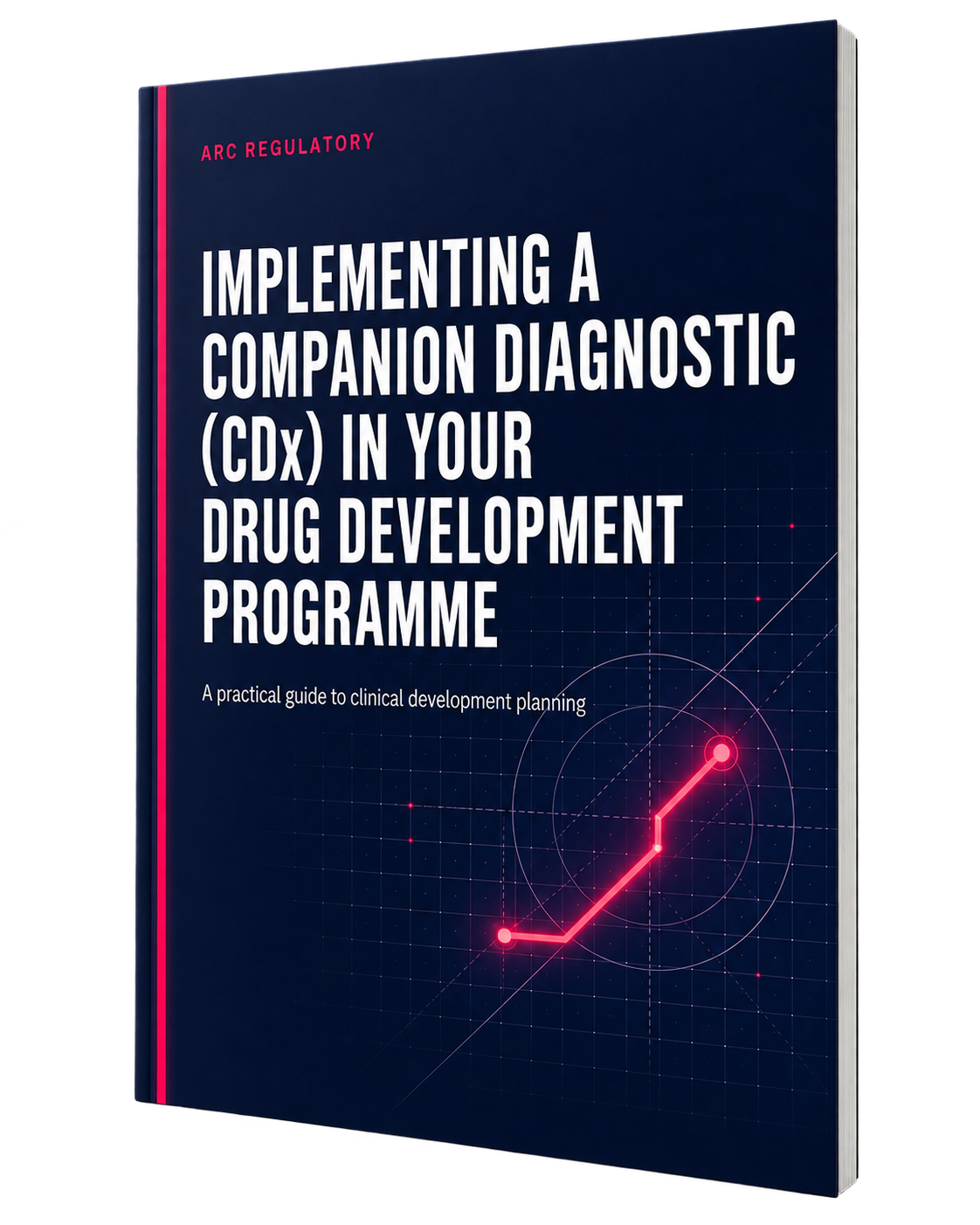
In this whitepaper, ARC Regulatory explore the considerations for the implementation of a candidate companion diagnostic (CDx) into an investigational new drug therapy trial.
Rapid developments in precision therapies, including significant advances in cell and gene therapy products, introduces myriad challenges for Sponsors across product development, clinical development, manufacture and not least, regulatory compliance.
The need to develop an in vitro diagnostic assay brings an additional burden, particularly since IVD development is not a core competency of most pharma/ biopharma organisations. Compliance with local medical device research regulations in jurisdictions where patients are being recruited is often overlooked or poorly understood and in many cases, in particular in Advanced Therapy Medicinal Product/Regenerative Medicine Advanced Therapy (ATMP/RMAT) trials, many Sponsors are unaware that they have an unapproved medical device performing a critical role in their therapy trial.
As more and more Sponsors work to develop IVD methods internally without the significant cost of partnering with a CDx vendor, ensuring that specialist IVD product development, regulatory and clinical research knowledge is available is a critical step towards compliance with local Good Clinical Practice (GCP) requirements prior to testing patient samples, ARC Regulatory explains the considerations for the implementation of a candidate companion diagnostic (CDx) into an investigational new drug therapy trial.
